The Brutalist Architecture Revival
How concrete giants are finding new life in contemporary design discourse
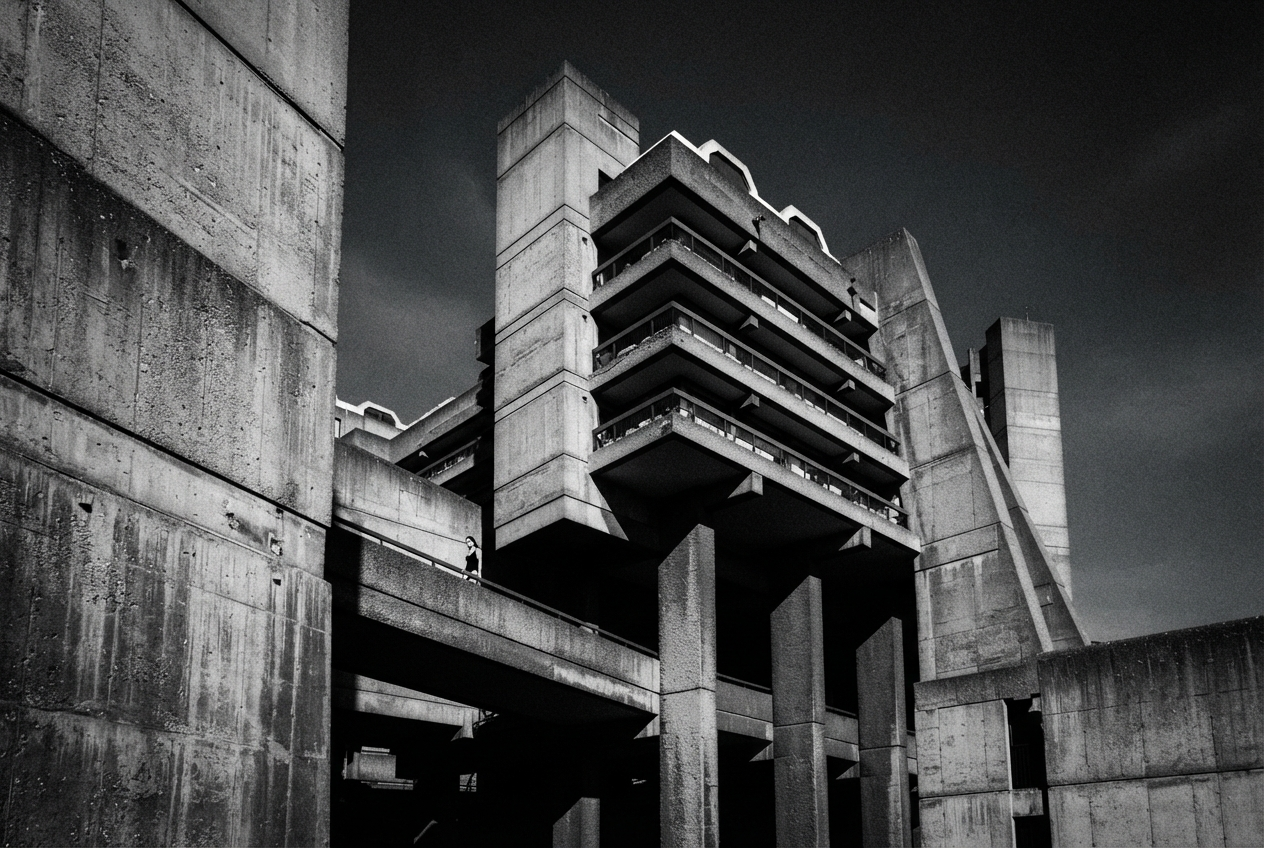
Brutalist architecture has undergone a remarkable transformation in public perception over the past decade. Once dismissed as cold and oppressive, these concrete monuments are now celebrated for their raw honesty and sculptural power.
The movement, which emerged in the 1950s and peaked in the 1970s, was born from a desire to express materials truthfully. Béton brut—raw concrete—became the medium through which architects like Le Corbusier, Paul Rudolph, and Alison and Peter Smithson articulated a new architectural language.
Today, a new generation is rediscovering these structures not as relics of a failed utopian vision, but as bold statements of material integrity. The rough textures, massive forms, and uncompromising geometries speak to our contemporary appetite for authenticity in an age of digital smoothness.
Preservation efforts have intensified, with organizations like the Brutalist Society advocating for the protection of endangered structures. Meanwhile, photographers and social media have played a crucial role in reshaping public opinion, transforming once-maligned buildings into Instagram sensations.
The revival isn’t merely nostalgic. Contemporary architects are drawing inspiration from brutalist principles—material honesty, structural expression, and social ambition—while adapting them to current contexts. The result is a new wave of buildings that honor the past while addressing present needs.
What brutalism offers today is a reminder that architecture can be both functional and expressive, both monumental and human. In an era of glass towers and generic facades, the brutalist insistence on character and place-making feels more relevant than ever.
Related Reading
Geometric Abstraction Today
How hard-edge painting is finding new audiences in the digital age
Typography as Resistance
How letterforms become political statements
The Empty Room
Minimalism in interior design beyond aesthetics