The Solitary Tree
What a single tree in an empty field teaches about resilience
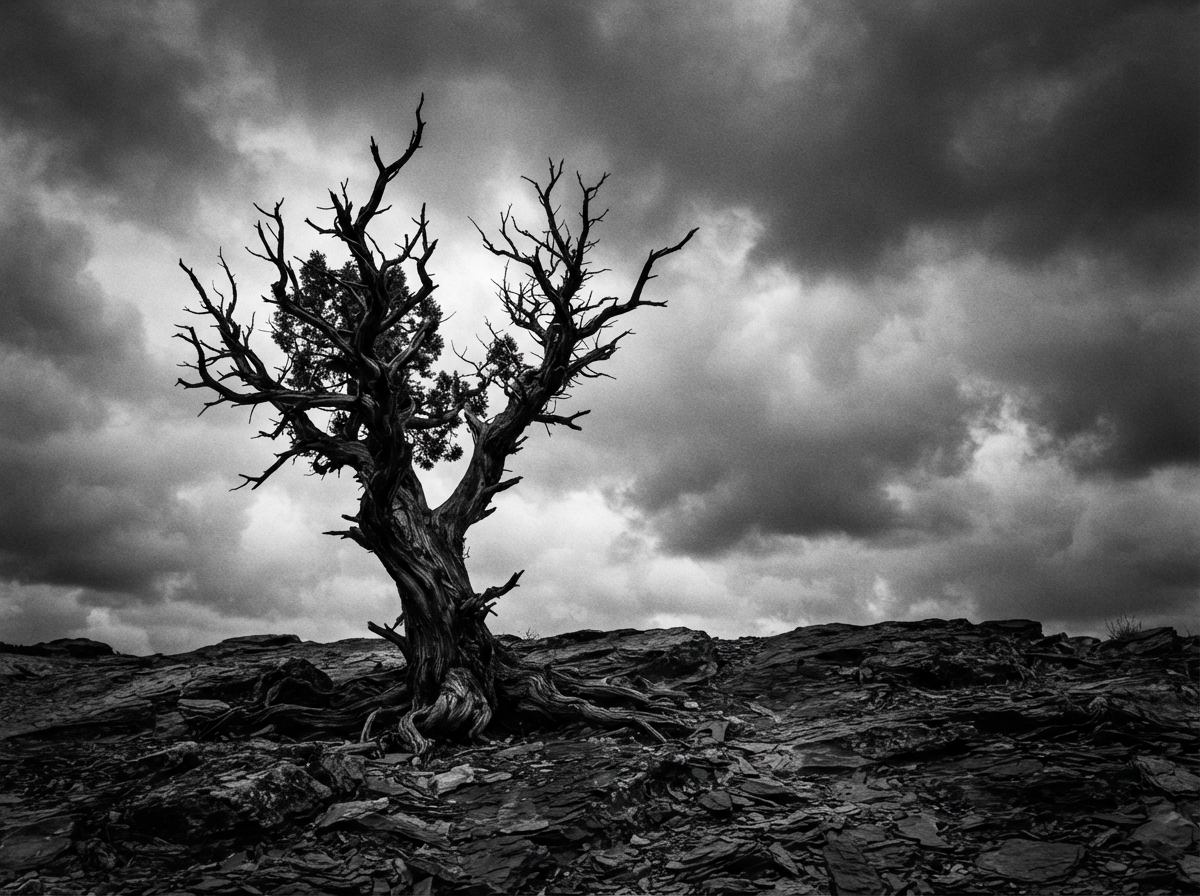
A solitary tree in an open field commands attention. Without the distraction of a forest, we notice its form completely—every branch, every leaf, every imperfection. This isolation transforms the tree from background to subject, from specimen to individual.
Such trees have long held symbolic power. In mythology, they mark sacred sites, serve as meeting places, or stand as guardians. In art, they represent endurance, solitude, or the relationship between individual and environment. Their visual impact derives from contrast—the singular against the infinite.
The biology of solitary trees differs from their forest-dwelling relatives. Without neighbors for support, they develop differently—wider crowns to capture maximum light, deeper roots to access water, thicker trunks to withstand wind. Their isolation shapes their very structure.
This adaptation offers a metaphor for human resilience. Like the solitary tree, people sometimes find themselves standing alone, without the support systems they once relied upon. Survival requires developing new strengths, reaching deeper for resources, weathering storms without shelter.
Photographers are drawn to solitary trees because they photograph well. The clear form against open sky creates strong compositions. The changing seasons provide natural drama—spring blossoms, summer fullness, autumn color, winter skeleton. Each image tells a story of persistence.
The ecological role matters too. A solitary tree provides unique habitat—nesting sites for birds, shade for livestock, food for insects. Its isolation makes it more, not less, valuable to the surrounding ecosystem. It becomes a landmark, a resource, a reference point.
Cultural attitudes toward solitary trees vary. In some traditions, they’re revered as ancient beings with accumulated wisdom. In others, they’re seen as lonely or vulnerable. The tree itself simply grows, responding to conditions with quiet determination.
Climate change affects solitary trees disproportionately. Without the buffering effect of a forest, they face wind, drought, and temperature extremes more directly. Their survival becomes a measure of environmental change, their health an indicator of broader conditions.
Visiting solitary trees has become a form of pilgrimage for some. These journeys combine hiking, photography, and contemplation—a way to connect with both landscape and inner experience. The tree becomes a mirror for human concerns about standing alone.
What the solitary tree teaches is not that isolation is desirable, but that it can be survived with grace. It demonstrates that strength and vulnerability coexist, that adaptation is ongoing, and that even alone, one can flourish.