Desert Minimalism
Finding clarity in the world's most austere landscapes
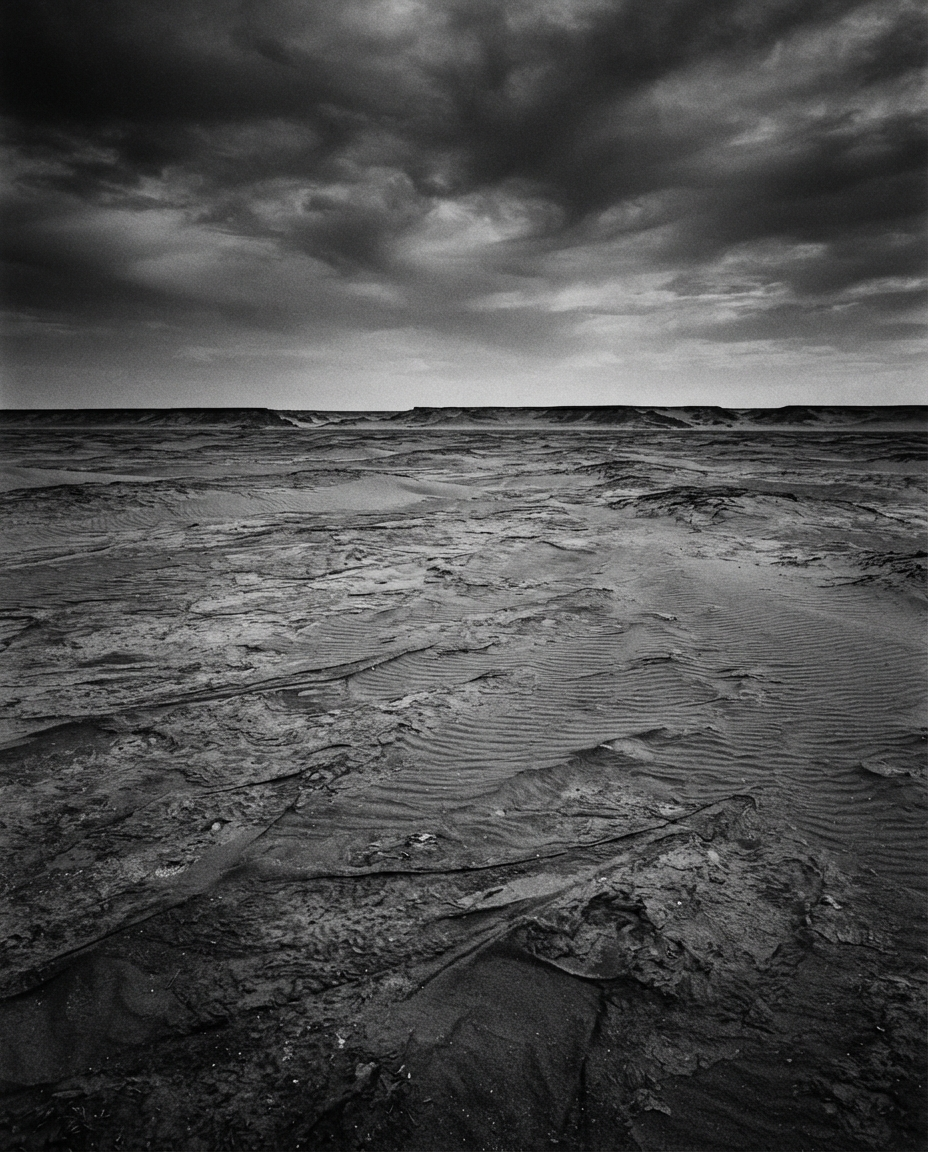
Deserts teach a particular kind of attention. Stripped of vegetation and distraction, these landscapes demand that we notice what remains: light, shadow, texture, and the slow movement of time across vast surfaces.
The minimalist aesthetic of desert environments—endless horizons, monochromatic palettes, geometric rock formations—has long attracted photographers, painters, and seekers of solitude. But the appeal goes deeper than visual simplicity.
Deserts operate on different scales than human experience. Their rhythms are measured in geological time, their distances in days rather than miles. Entering a desert means entering a world where human concerns shrink to appropriate size.
This perspective shift is increasingly valuable in our accelerated culture. Desert minimalism offers not escape from complexity, but recalibration of what matters. When water becomes the primary concern, other worries naturally recede.
The physical experience matches the visual. Desert air carries scents for miles. Sound travels with crystalline clarity. Temperature swings demand constant adaptation. Every sense is engaged, yet the overall impression is one of spareness and stillness.
Contemporary architecture in desert regions has learned from this context. The best desert buildings don’t impose on the landscape but dialogue with it—using local materials, respecting solar geometry, and acknowledging the primacy of sky and earth.
Travel in desert environments requires preparation and respect. Water, shelter, and navigation become primary concerns, replacing the casual assumptions of urban life. This necessity creates a different relationship with place—one based on survival rather than consumption.
The cultural associations of deserts—spiritual testing, purification, revelation—reflect their capacity to strip away the nonessential. Whether or not one seeks transcendence, the desert offers a powerful reminder of human smallness and resilience.
In a world of information overload, the desert’s blank pages invite us to write our own meanings. Or simply to be silent.